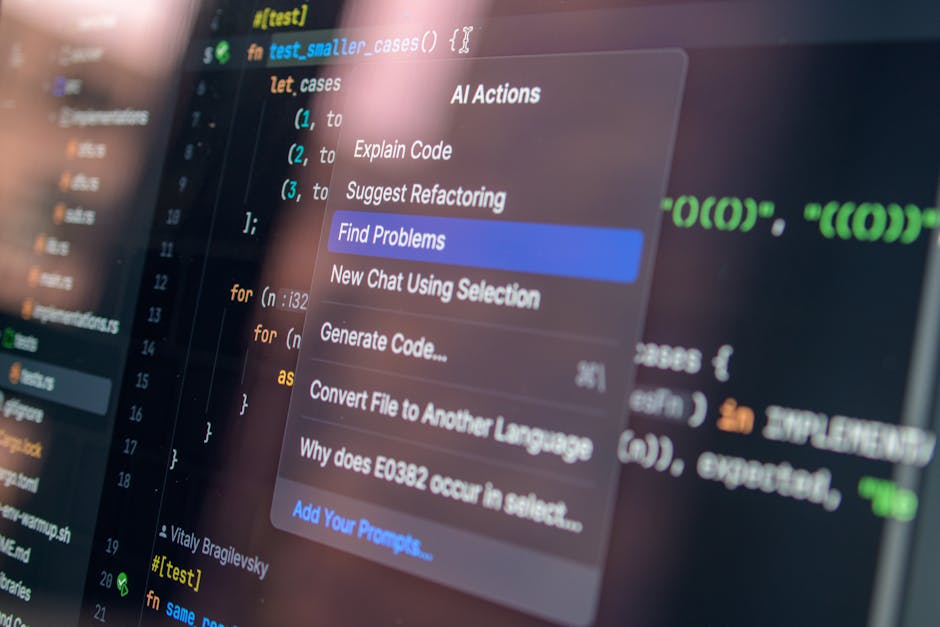
Global IT services firm Endava has embedded AI agents throughout its software development process, from requirements gathering to deployment. The move signals a shift from AI as a coding assistant to AI as an autonomous workflow participant.
NVIDIA's research shows that synthetic training data structured around task families—not raw scale—drives targeted capability gains. Their approach improved scientific reasoning by 11 points while keeping math and code performance stable.
Stop wasting hours reviewing meeting notes. Learn how to use AI tools to automatically generate summaries and extract action items from any meeting—whether it's Zoom, Teams, or in-person. No coding required, and you can start for free.
The Linux Foundation's new Tokenomics Foundation claims it will bring order to spiraling AI costs. But with frontier model providers conspicuously absent and token pricing growing more complex by the quarter, the initiative reveals more about what enterprises can't control than what they can.
Everyone's focused on GPUs for AI, but the shift to autonomous agents is quietly turning compute on its head. The bottleneck isn't model inference anymore—it's orchestration, sandboxing, and tool execution. All CPU workloads.
DharmaOCR's methodology proves Direct Preference Optimization isn't just for chat alignment. Applied after supervised fine-tuning, DPO reduced text degeneration by an average of 59.4% across five vision-language model families—with zero exceptions.
Drowning in news feeds and newsletters? This step-by-step guide shows you how to build a personalized AI news digest that delivers only what matters to you — in under 25 minutes, using free tools and zero coding.
After two weeks of daily testing with real development tasks, Claude Sonnet 4.5 edges out GPT-4o for most developers. It's faster for code generation, writes cleaner functions, and costs 40% less per million tokens. But GPT-4o wins on complex reasoning and multimodal tasks.
At Build 2026, Microsoft doubled down on a contrarian thesis: enterprise AI needs organizational memory more than bigger models. The company launched HorizonDB, GPU-accelerated warehousing, and made Fabric IQ generally available to give agents the context layer they're missing.
Anthropic is scaling Project Glasswing to 150 new organizations, providing access to Claude Mythos Preview for vulnerability detection. The expansion comes amid concerns about validation transparency and the race to secure critical infrastructure before offensive AI capabilities proliferate.